

You've seen the email. "Hi
Sarah, I came across Acme Corp and loved what you're doing." Sarah's name
is right, Acme is right, and everything else is a lie, because nobody who loved
anything about Acme would write a sentence that vague.
Recipients spot this in about a second. They've received hundreds of these, and a merge tag that fills in a first name has stopped signaling effort. If anything, it signals the opposite a tool did the work while a person skipped it.
Personalization is different
from email. Personalization does not need me to write each email by hand.
Personalization requires me to decide what is worth mentioning. Then I set
things up so that each detail lands in the place, for every lead.
Why Most "Personalized" Emails Aren't
The act of changing a name and a
company in an email that's otherwise exactly the same makes the envelope more
personal, but not the actual message. The main message is still the paragraph
sent to five hundred people. The person reading it can sense that even if they
can't say why.
The test is simple. The test asks you to take your email
delete the name and company and read what is left. The test checks if the email
still makes sense for any lead, on your list. If it does the email is not
personalized. The email is a template wearing a name tag.
Two Levels Worth Caring About
You don't need to make a
research report for every person you meet. Most of the information is found in
two levels of detail. It is useful to know which one you are working with.
•
Segment level: Everyone in the
group has the role, the same industry or the same problem so you write about
that situation directly. A sentence about the difficulties of managing a
logistics team feels different, than talking about general "operational
efficiency." This way of writing works well. Covers most of your list.
•
Individual level: One specific
real detail about this person or their company: a hire, a product launch
something they wrote. It takes a few minutes, per lead so use it for the
accounts that're most important.
Most campaigns work best when they use segment-level
writing, for the majority of the list and then put effort into a smaller top
tier. Trying to do that level of individual work for everyone is how people get
tired and stop doing outreach.
Finding Something Worth Mentioning
The detail has to be real, and
it has to be relevant to why you're writing. A compliment about their website
design that has nothing to do with your offer is decoration. It might even make
things worse, because now the reader is wondering what you actually want.
Sources are easy to find if you
give yourself a minute. Look at the company’s news or blog posts at a LinkedIn
post that the company wrote, at a job listing that hints at a problem the
company is trying to solve or at the way the company describes its own product
on its homepage. Job listings are often overlooked. If a company is hiring
three support agents the company is telling you something, about the company’s
week.
Then connect that information to your offer in one sentence
and stop. If the connection takes a paragraph to explain that connection is the
detail.
A Before and After
Here's what the difference looks
like in practice. The first version is what most cold emails sound like. The
company name is invented for the example.
Before: " Hi Mark, I
saw your company growing. I think our tool can help your company scale
outreach. Does your company have 15 minutes this week?"
After: " Hello Mark,
I saw that Northwind is hiring two SDRs this month. Teams at that stage usually
hit the wall: new reps spend half their day hunting for email addresses instead
of sending. I built a search that filters by industry and country so a new rep
can start with a usable list, on day one. Worth a look?"
The second one is barely longer.
It just contains one true observation, one problem that follows from it, and
one reason the sender is the right person to write. Nothing in it could be
pasted into an email to a different company.
Build Variables into Your Templates
Rewriting the same content from
scratch is not feasible every single time, especially when you have, then the
number of leads to do. A better way to do it is to use a template that has
spaces. The same structure will be used. The actual information will be
different.
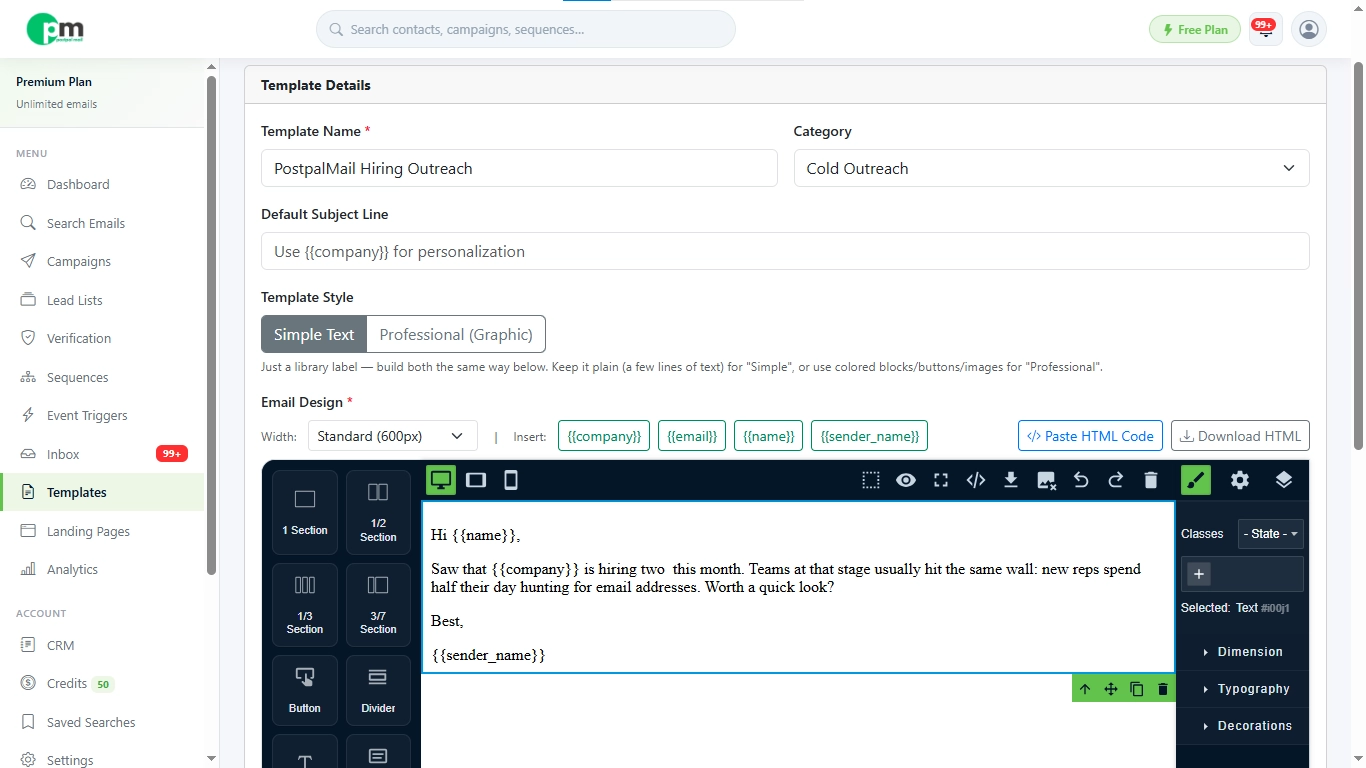
With PostPalMail's
email templates, the user can add variables, like name, company and
the senders name into the text. The message text then allows the sender to add
a line, for each lead where PostPalMails email templates matter most.
PostPalMails email templates take care of the repeated tasks. The sender should
focus the time on the one sentence that makes the email feel as if PostPalMails
email templates was written for the lead.
Start With a List That Actually Fits
This is the part that people
rush through. This part quietly decides how everything else works. Personalization
cannot fix an email that goes to someone who will not notice it. Even a message
that is specifically made for that person still ends up in the trash.
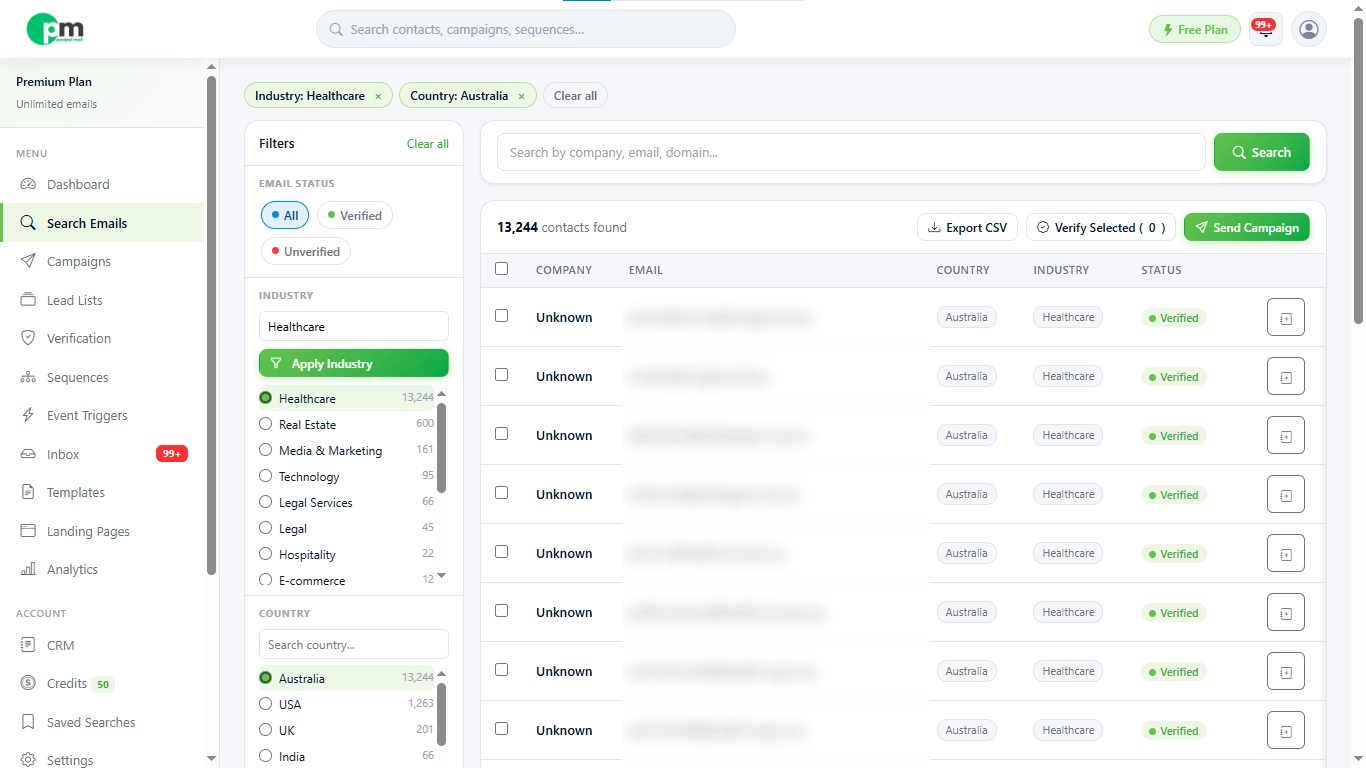
Building your list with PostPalMail's
lead search lets you filter by industry, country, and email status
before you write anything. Tighter filters mean the segment you're writing to
genuinely shares a problem, and that makes segment-level personalization far
easier to get right.
A Workflow You Can Repeat Every Campaign
Once you do these times routine
becomes a routine that takes far less time than writing fresh emails ever did.
•
Filter your list first by
industry, country and email status so everyone, in the list shares roughly the
same problem.
•
Split it into two tiers before you
write a single word. Your best-fit accounts go in tier one, everyone else in
tier two.
•
Write one solid template for the
segment, with variables for name and company.
•
Add one custom line per lead for tier
one. Two or three minutes each, no more.
Send the messages then compare
reply rates between the tiers after a week or two. That comparison shows
whether the extra effort is worth it, for your audience.
The final step is the one people often ignore. It’s the one
that helps the entire routine get better as time goes on. If you don't do it,
you're just doing the things over and over and hoping for something different.
Where Personalization Backfires
Sometimes more details are not
helpful. A few mistakes can turn an idea into something awkward.
•
Making mistakes with information.
Using the company name when talking to someone or wishing them well for a job
they no longer have is worse than not trying to personalize at all.
•
Sharing much information. Talking
about their college, their hometown and a conference they went to in 2019 feels
like watching them. Focus, on things related to their job.
•
Forced flattery. "Loved your
recent post" without saying anything specific about the post is obvious
filler.
•
Fake familiarity feels like a
trick. Opening, like a friend when you have never spoken only pushes people
away creating distance instead of warmth.
How Much Effort Is Enough
A workable rule: sort your list into tiers before you write.
The top tier, maybe your twenty best-fit accounts, gets a real custom line
each. Everyone else gets segment-level writing with variables filled in.
That split helps keep quality high where it matters most. It
also makes your week easier to handle. Afterward you get data. You can compare
reply rates, between the tiers. This shows whether the extra effort is actually
working for your audience.
Conclusion
Personalization at scale does
not mean typing a hundred custom emails. Personalization, at scale means
picking the list addressing a real shared problem and saving personal effort
for leads that are worth it.
Try the step, by step method on
your marketing effort. Choose your twenty companies create one real meaningful
message for each and let pre-made messages handle the rest. Check the
responses. Let your own results show how much work makes a difference.
If you want to try the tiered
approach yourself, create your PostPalMail account and build your
first segment with lead search and templates. Send the campaign, check the
replies, and adjust from there.
Disclaimer
This article is for information only. It shows how cold
outreach is usually done at the time this was written. Response rates can be
different depending on the industry the people you contact and how good your
list is. There's no promise of any outcome.