

Tuesday at 10 am. Everyone says it over and like it was
written on a stone tablet that fell from a mountain. If you search " time
to send a cold email" you will find the same three answers on every
website. These answers are usually supported by a study, from a company that
sells email software.
None of it is wrong in a way that's clear. It's just that
it's smaller than people think it is. The time you send can slightly. Decrease
your open rate. Your email list, your line and how relevant your email truly is
do much more work, than the specific hour you choose to send.
What the General Data Actually Shows
Across most B2B studies, midweek
mornings, Tuesday through Thursday, roughly 9 to 11am in the recipient's local
time, tend to edge out other windows. Monday mornings are crowded with catch-up
work, and by Friday afternoon most people have mentally checked out.
That's a real pattern, not a
myth. It just isn't a huge one. The difference between a good time and a
mediocre time is often a few percentage points of open rate, not double or
triple.
Time Zones Matter More Than the Day of the Week
Sending at 10 am your time to a
list spread across five countries means that some people are getting the email
during lunch while others are getting it in the middle of the night. That
difference in timing is more important, than choosing Tuesday or Wednesday.
If your leads span multiple
regions, segment by time zone before you obsess over the day. A well-timed
email to the wrong time zone is still badly timed.
Let the Platform Handle the Scheduling
Manually calculating send times
across time zones for a list of any real size gets old fast, and it's easy to
get wrong.
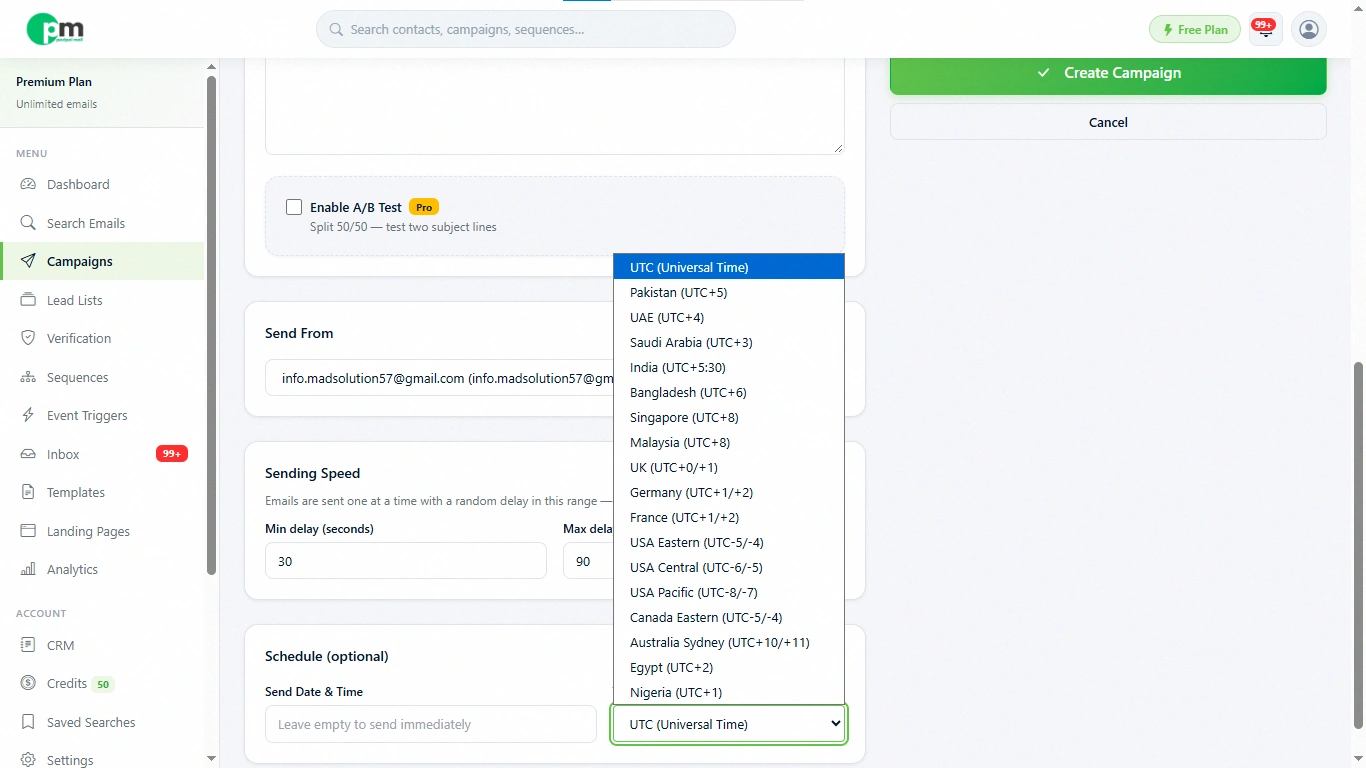
PostPalMail's
send-time optimization lets you set the send window once, and it
adjusts delivery based on each recipient's time zone instead of blasting the
whole list at your local 10am. One setup, no spreadsheet full of UTC offsets.
Common Timing Mistakes Worth Fixing
A handful of habits cost more
than picking the wrong day ever does.
•
Blasting an entire list in one
batch. A sudden spike in sending volume looks suspicious to mail providers
regardless of what time it happens.
•
Scheduling every follow-up at the
exact same hour as the original email, which starts to look mechanical after
the second or third one.
•
Ignoring time zones entirely and
sending everything on your own clock.
•
Chasing the "perfect"
hour down to the minute instead of picking a reasonable window and moving on to
the parts that actually matter.
What Actually Moves the Needle More Than Timing
If you're spending more time
picking a send hour than writing the subject line, the priorities are
backwards. A sharp, specific subject line will beat a perfectly timed generic
one every time. So will a list built around people who actually fit your offer
instead of a broad scrape.
Deliverability matters more too.
An email sitting in spam doesn't get opened no matter what time it lands. Get
the fundamentals right first, the send time is a smaller lever you pull after
that.
Read Your Own Send-Time Data
Generic studies describe an
average across thousands of unrelated companies. Your audience might behave
nothing like that average. A list of teachers opens email on a completely
different schedule than a list of finance executives.
Run a few campaigns at different
times and compare the results yourself. That's the only data that's actually
about your list.
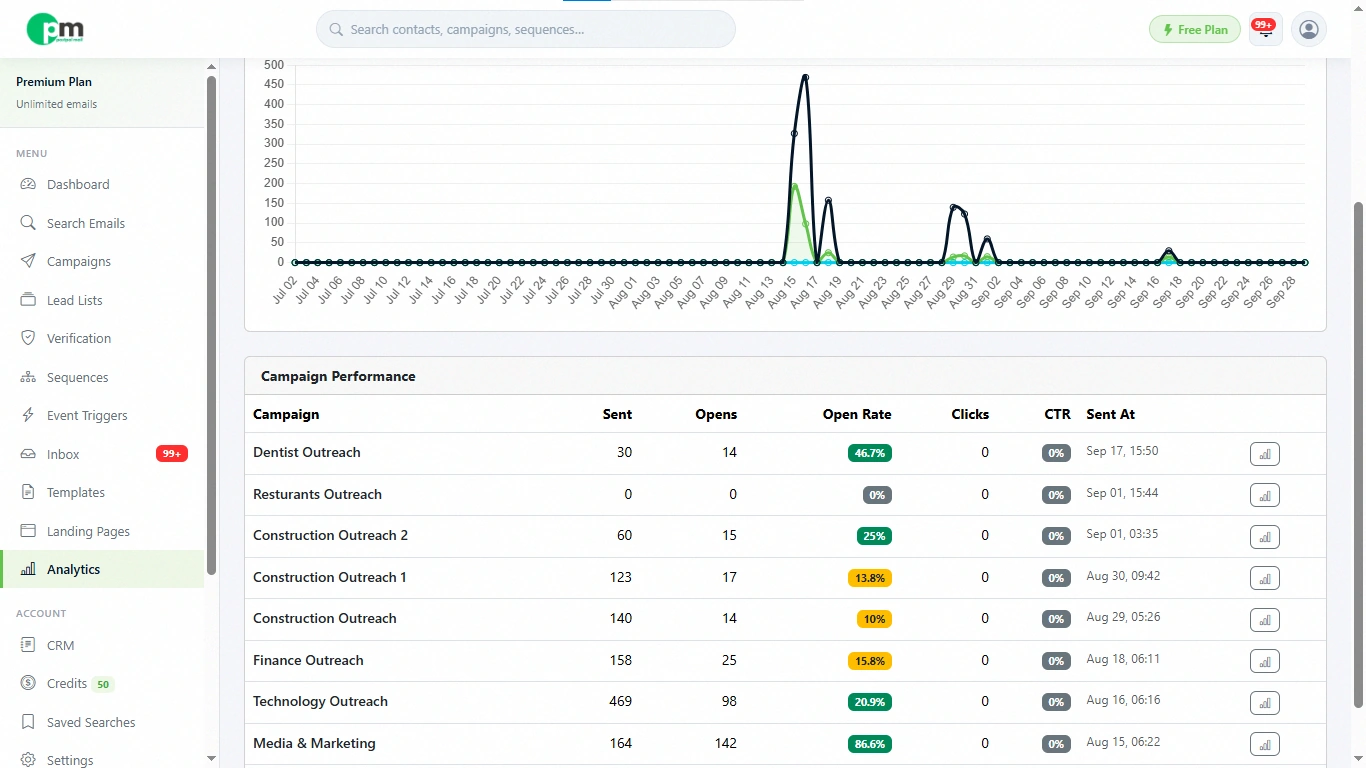
PostPalMail's
analytics dashboard breaks down open rates by campaign, so after a
few sends you'll have a real pattern instead of a borrowed one from a blog post
like this. Trust that over any generic rule.
Conclusion
Send time is a lever but it’s a small one. Tuesday morning
won't save a subject line and Friday afternoon won't ruin a message that is
truly relevant and well-targeted. Get the list first. Make sure the subject
line is strong. Fix the deliverability basics before you even think about
timing.
Once those are strong choose a good time frame take into
account time zones and let a few real campaigns show you what really works for
your audience. Begin your campaign with that plan: message and list first send
time as the small change, at the end.
Disclaimer
This article is for information only. It shows how cold
outreach is usually done when it is written. Open rates change depending on the
industry the people who get the message and how good the list is. This does not
promise any outcome.