

The subject line's whole job is
to earn the tap. Once the email is open, that job is done, and a new one starts
immediately. The first line now has about two seconds to convince someone this
wasn't a mistake.
Most cold emails fail right
here. Not at the pitch, not at the CTA, at sentence one. "I hope this
email finds you well" is doing nothing for you. It's not rude, it's not
wrong, it's just invisible. The reader's thumb is already moving toward delete
before they finish reading it.
Why This Matters More in Cold Email Than Anywhere Else
A newsletter can get some
benefit of the doubt. The reader has subscribed. There is already a
relationship, even a thin one. A cold email starts at zero. Nobody has asked
for that email and the first line of that cold email is doing double duty:
proving that that cold email is worth reading at all and proving that the
sender did more, than copy-paste a list.
That's a lift than most people account for when they write
the opener last almost as an afterthought once the real pitch is finished.
Writing it first before the rest of the email tends to produce something. It’s
sharper simply because it isn’t competing for attention with four paragraphs
you already wrote.
Your First Line Is Also a Second Subject Line
Gmail and Outlook both show a
preview snippet next, to the subject preview snippet pulled from the start of
the email body. On a phone preview snippet might be the extra information a
person sees before deciding to open the email at all.
Which means a dull opening line
doesn't just cost you after the open. It can cost you the open itself. Write
your first line assuming it's being read as a second headline, because on most
screens, it is.
Lines That Kill an Email Before It Starts
A few opening lines appear over
and again and they all cause the same problem. They don't say anything so the
person reading the email immediately thinks it was sent to many people before
even finishing the first sentence.
•
"I hope this email finds you
well." Pure filler, could precede literally any email to anyone.
•
My name is [X] and I work at [Y].
No one opened the email to find out your name. The email opening is what the
signature is for.
•
"I wanted to reach out
because..." Reach out is the tell. It's the phrase every templated cold
email uses to stall before getting to the point.
•
"Hope you're having a great
week!" Same category as the first one, just dressed differently.
None of these are offensive.
They're just forgettable, and forgettable is fatal when you're competing
against forty other emails for two seconds of attention.
What Actually Earns the Next Sentence
Lead with reader, not sender.
The strongest openers reference something true and specific about reader before
senders name ever comes up. I have seen how this works for reader. A detail
about readers company, about readers role or about a problem that people, in
readers position tend to run into. These signals mean that email was really
made for people who read it.
Clear points beat ideas every time. "Companies in
logistics often have trouble with X" is better than "Businesses today
deal with problems " because the second one could be, about any topic at
all.
A Real Before and After
Abstract advice is easy to nod
along to and hard to apply. Here's what the difference actually looks like,
using a made-up company name.
Before: "I hope this
email finds you well. My name is Sarah and I work at GrowthStack. I wanted to
reach out because GrowthStack helps companies, like yours improve
marketing."
After: "Saw that
Northwind just posted openings for two marketing coordinators. Teams scaling
that fast usually hit the same wall: campaigns multiply faster than anyone can
track what's actually working."
Same situation, same intent to
pitch something eventually. The first version could be pasted into an email to
any company on earth. The second one only makes sense for Northwind, this week,
because of something real that's happening there.
Match the Opener to Why You're Actually Emailing
Not every cold email is a sales
pitch. The opening line should show that. A quick and real question needs a
first line, then a full product pitch.
If you want five minutes of advice start with the thing that
sparks curiosity not with a company introduction. When you pitch a tool a
shared‑problem opener usually does work than an observation opener because it
goes straight to a point the reader might really feel. Matching the opener’s
energy to the ask keeps the whole email from feeling like a mismatch, between
the first line and everything that follows.
Three Opener Patterns Worth Testing
You don't need to reinvent this
for every email. A handful of structures cover most good openers.
•
The observation opener. Point at
something real and public: a hire, a launch, a post they wrote. "Saw
Northwind just opened a second warehouse" works because it's checkable and
specific.
•
The shared-problem opener. Name a
problem common to their role or industry without assuming it's theirs yet.
"A lot of ops lead we talk to are stuck manually tracking X" invites
a reaction instead of a guess.
•
The direct-question opener. Skip
the introduction. Ask those things that are matters. How is your team dealing
with X? That sounds like a question, not something written down.
Build Reusable Openers with Templates
Writing an opener for every
single lead doesn't work when you're sending out more, than a few dozen emails.
It just isn't practical. The solution? Use a template. Then just fill in one
line those changes based on the person. That’s all it takes.
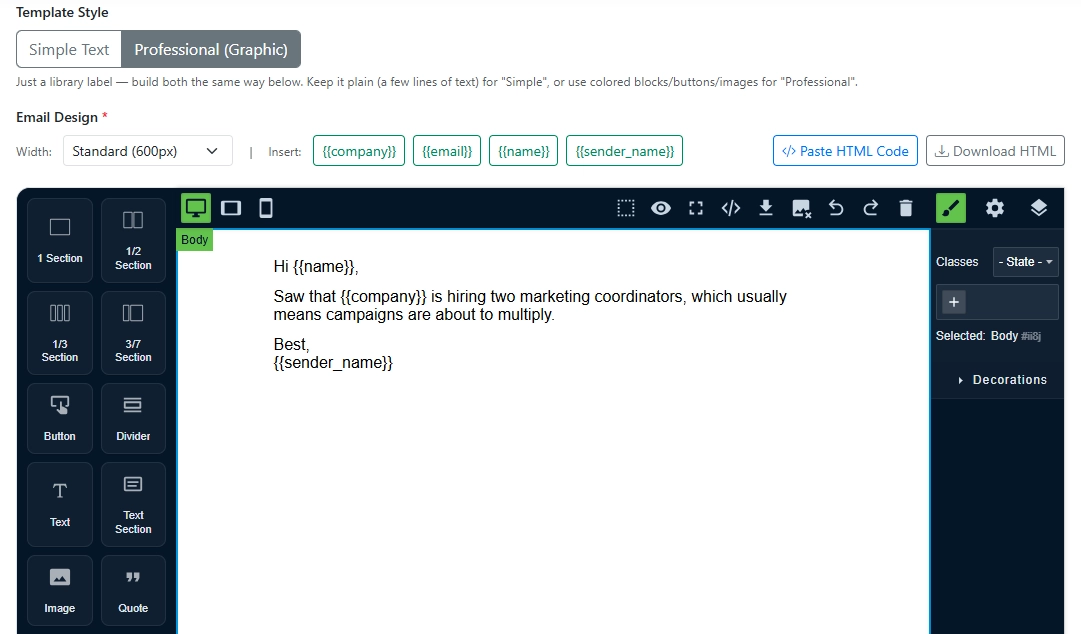
PostPalMail's
email templates let you drop a personalization variable right into
that opening sentence, pulling in company, industry, or job title
automatically. The rest of the email stays fixed. Only the first line moves,
and that's the line doing the most work.
Mistakes That Sneak Past the Filler Check
Even once someone drops the
"hope this finds you well" habit, a few other issues creep in.
•
Opening with a compliment that has
nothing to do with the offer. "Love your website" followed by an
unrelated pitch reads as a setup, not a compliment.
•
Starting with an apology.
"Sorry for the cold email" draws attention to the exact thing you
don't want the reader thinking about.
•
Overexplaining who you are before
saying anything useful. Two sentences of company background before the point is
still too many.
• Using a statistic that doesn’t relate to the reader feels out of place. It’s the kind of thing you’d see in a presentation, not a message. It doesn’t connect. It doesn’t matter. It just sits there.
Most of these share a root
cause: writing the opener about the sender instead of the recipient. Every
example above gets fixed the same way, by swapping the subject of the first
sentence from "I" or "we" to something true about the person
reading it.
Test Openers Against Each Other
The honest answer to "what’s the best opening line" is that nobody knows for your list until you've tested it. Opinions, about hooks are cheap and often wrong once they meet an audience.
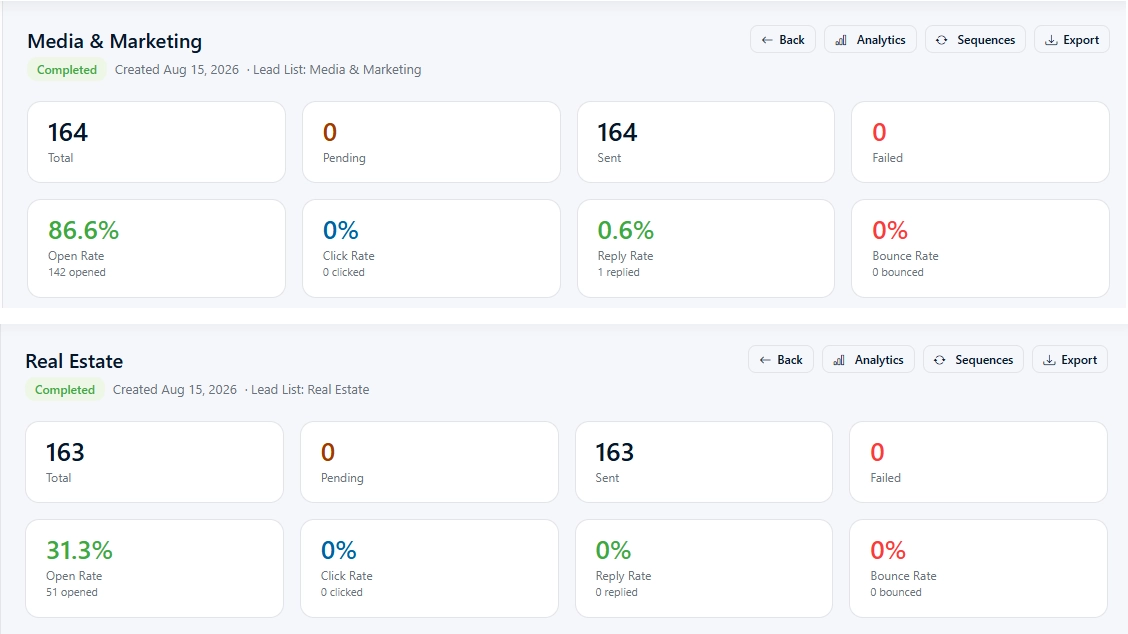
Create two campaigns with the
email. Change the first line. Send each to a segment of your list. Keep the
line the same. Keep the send time the same. Keep the offer the same. Make the
opener the only difference. This way you see what really works for your people.
Once both campaigns are sent
open each campaign in PostPalMail. Compare the open rate of each campaign with
the reply rate of each campaign side by side. Keep the campaign that wins as
your baseline and test the next variation, against that baseline.
Conclusion
The subject line gets the
attention. The first line decides if that attention was useful. Avoid the words
start with something real and clear, about the person reading and put your name
at the end where it should be.
Choose one email you are sending
this week and rewrite the line of that email using one of these patterns.
Ready to test it on a campaign? Create
your PostPalMail account. Set up a template with a personalized
opening line send it as a campaign and compare the replies, against your
previous one.
Disclaimer
This text is only to provide information. It shows how cold
outreach is usually done when the article was written. How often people respond
depends on the industry the group of people being. How good the list of
contacts is. This text does not promise any outcome.