

"Let me know if you are interested." Those four
words, at the end of a good email and they quietly undo everything above them.
The subject line was opened. The first line was read. The
pitch was clear. Then the email stops, leaving the reader with a choice that
has no step. Most people when faced with much uncertainty do nothing. Not
because they are not interested but because replying needs thought than it
should.
The CTA Is Where Most Emails Quietly Die
A reply takes effort. Someone
has to stop what they're doing, decide what they actually think, and write
something back. Every bit of ambiguity in your closing line adds friction to
that decision.
"Let me know if you are interested" asks the
reader to figure out their level of interest. The reader must also decide what
the word interested means in this context. Then the reader must write a reply
from nothing. That is three steps, in one sentence. Most inboxes give a choice:
close the email and move on.
What a Strong CTA Actually Does
A good closing line doesn't make the reader choose. It
guides them to the step. It makes saying yes feel easy, natural and the obvious
choice.
Specific beats ended. A question that has a clear yes. No
answer gets replies that a vague invitation never gets. "Worth a 15-minute
call Thursday?" takes five seconds to answer. "Let me know your
thoughts" takes effort to even start.
Why Vague CTAs Fail Even When the Reader Is Interested
It is not simply about laziness.
Decision fatigue is real. A cold email usually lands in the middle of someone’s
workday sandwiched between a meeting that ran long and a Slack thread that will
not die. Nobody in that state wants to draft a reply, from scratch.
A specific CTA removes that
burden. It converts "what should I say back" into "yes or
no," which is a much smaller ask of someone's attention. The interest
might already be there. A vague closing line just makes it too much work to act
on it.
A Simple Framework to Write Any CTA
If you feel stuck, I find this
three-part structure covers situations: name the action make it small give an
easy out.
• Name the action. Tell what you
want a call, a reply or a quick answer instead of leaving it implied.
• Make it small. The smaller the
ask, the easier the yes. A 15-minute call beats a 45-minute demo, on an email.
• Give an easy out. "No worries
if not" or offering an alternative time costs you nothing and lowers the
pressure enough that people are more willing to engage at all.
Run your own draft CTA through
those three checks before sending. Most weak closing lines are missing at least
one of them.
A Before and After
Here is the same email, with two endings, same pitch, same
lead.
Before: "If this sounds interesting let me know.
We can set something up."
After: "Worth a 15-minute call week? I have
Tuesday afternoon or Thursday morning open, happy to work around your
schedule"
The second version does three things that the first one does
not. It names an action. It proposes times. It still leaves room for the reader
to suggest something else. Nothing, in this version forces the reader to come
up with their next step.
CTA Formats Worth Testing
A few structures cover most
situations without needing to be reinvented every time.
• The direct yes or no. "Worth
exploring?" or "Open to a quick call this week?" Low effort,
easy to answer either way.
• The two-option choice. "Would
Tuesday or Thursday work better, for a call?" This makes it easier to
decide. It avoids messages back and forth. It shows there's a way.
• The next step. "Mind if I
send over a short case study?" This works early on. When asking for a call
feels soon this keeps things moving. It gives the person something helpful
without pressure.
• The micro-commitment. "Is
this still something your team is dealing with?" Gets a reply without
asking for a meeting at all, useful as a first-touch CTA.
Match the CTA to Where the Lead Actually Is
A first cold email and a third follow-up shouldn't end the
way. Asking for a 30-minute call, in the first message before any trust has
been built is a much bigger ask than most strangers are likely to agree to.
On in a conversation a small action or a gentle next step
usually works better, than asking for something big right away. By the third
time you reach out if there’s already some understanding then asking to meet on
the calendar makes more sense. Making sure the request matches what has been
built far helps not to ask for too much too soon.
A P.S. Line Can Reinforce the CTA Without Repeating It
The short postscript after the signature is read often than
other parts because many people skim to the end before deciding whether to go
back and read the middle. The short postscript is therefore a place to restate
the ask, in a different form instead of copy‑pasting the same sentence twice.
If the main call to action suggested a call the P.S. Could
make things less intense: "P.S. Even a quick reply, with your thoughts
works if a call isn't the right next step." It is not. Using it in every
single email can make it less effective but in a first cold email it can reach
someone who quickly passed over the main request.
Build CTA Variants into Your Templates
Rewriting a closing line from
scratch for every email isn't realistic once you're sending to more than a
handful of leads, and a sequence makes this easier to manage anyway.
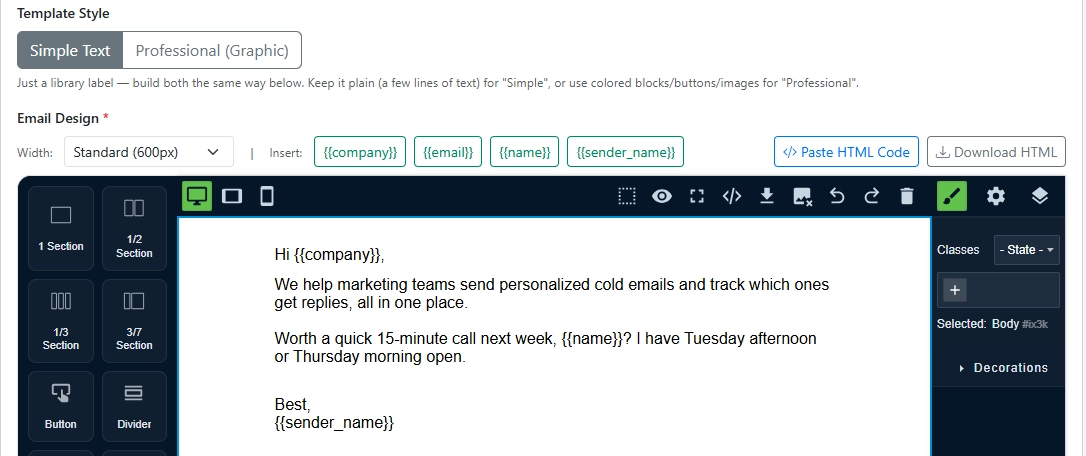
Inside PostPalMail email templates, you can set a CTA for each step of a sequence.
Start with an ask in the first email. Then by the email use a direct call, to
action. You don’t need to rewrite the message every time. The structure stays
reusable. Only the closing line changes.
Mistakes That Weaken an Otherwise Good CTA
A few habits can ruin a closing
line even if the rest of the email is strong.
• Putting many requests in one
sentence. Saying "Let me know if you'd like a call or a demo or more
info" makes it hard to decide because now there are three things of one.
• Hiding the call, to action in a
paragraph. If someone has to search for it they’re likely to miss it. Keep the
action clear and easy to find.
• Making a request that's too big
too fast. A 30-minute demo request, in a cold email seems like taking too much
before any trust has been built.
• Ending with a question that isn't
really a question. "Thoughts?" technically asks something, but it
hands the reader the same blank page as no CTA at all.
Test Your CTA Like Everything Else
The best call to action format
for a message depends on who's reading it what offer is being made and where
that message appears in the flow. Trying to figure it out without proof gets
you some of the way. Testing gives you the answer.
Send two versions of the message
with different closing lines, to similar groups and see which one performs
better.
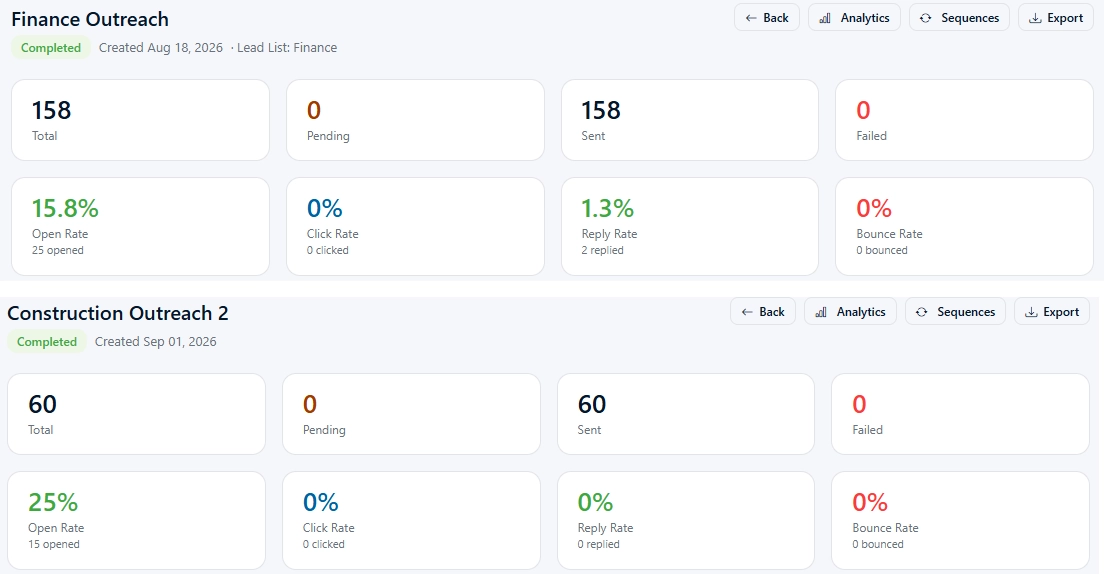
Reviewing reply rates inside PostPalMail's
analytics shows which CTA actually converted, not just which one
read better on paper. Keep the winner as your new default and test the next
variation against it.
Conclusion
A sharp subject line and a
strong opener can still fail to get a reply if the closing line leaves the
reader with a ended choice. The solution isn’t, about being cleverer. It’s
about being specific. Name the step clearly. Keep it small that saying yes
feels easy. Give the reader little to think about as possible.
Pick one email that is being
sent this week and rewrite the line using one of these formats.
Are you ready to put this into a
sequence? Create your PostPalMail account and set up
different CTAs for each step, then let your analytics tell you which one
actually earns the reply.
Disclaimer
This article is meant to provide information and shares
common cold outreach methods as they are understood when this is written.
Response rates can differ depending on the industry the people you're reaching
out, to and how good the contact list is. There's no promise of any outcome.