

You send a cold email. A couple
of days go by. Nothing. Your first instinct is probably to shrug and move to
the next lead, maybe with a nagging feeling that sending another email would
make you look desperate. Here is the thing though: most people who do not reply
to an email are not rejecting you. The people are busy the email got buried in
a pile of thirty others. The email just landed at the wrong moment.
So why do follow-ups get such a
reputation? Honestly because most follow-ups are bad. They're guilt trips, or
lazy "bumps" with nothing new to say. There's a real difference
between following up well and following up in a way that makes someone wish
they'd never given you their email in the first place. Let's get into how many to
send, how far apart, and what to actually write.
Why One Email Almost Never Gets a Reply
Inboxes are full. A first cold
email has to fight for attention against everything that arrived that day. Even
if the message is helpful, it might get glanced at once tucked away in the mind
as "something to look at later ". Then lost under the next wave of
messages. Silence usually doesn't mean interest. It often just means the timing
wasn't right. Not disinterest.
Outreach teams that actually
track this stuff will tell you the same thing: a decent chunk of replies show
up after the second or third touch, not the first. Treat one email as the whole
campaign and you're leaving interested people on the table for no better reason
than nobody followed up.
What Makes a Follow-Up Feel Pushy
A handful of habits are behind
most follow-ups that get ignored, muted, or flagged as spam. Watch for these.
·
Opening with "just
following up" or "just wanted to bump this" and stopping there.
It adds nothing and tells the reader you didn't bother thinking of anything new
to say.
·
Sending three or four
emails within a couple of days. That is not persistence that is pressure.
·
Copy-pasting the original
pitch exactly the same words, as if the first email was never sent.
·
Adding a guilt line, like
"I know you're busy. " It makes people feel defensive of wanting to
respond.
How Many Follow-Ups, and How Far Apart
Two to three follow‑ups after
the initial email are a range for most cold outreach. I recommend spreading
these follow‑ups, over two to three weeks. Send the first one around three to
four business days after the original, enough time for it to have actually been
seen without letting the thread go stale. Later follow-ups can sit a bit
further apart since you're not racing a clock anymore.
There's no magic number here, it
really does depend on your audience and offer. But the underlying idea holds
up: give each email some room to breathe, and stop once you've genuinely made
your case a few different ways.
Let a Sequence Handle the Timing for You
Keeping track of who needs a
follow-up and when it should happen becomes complicated quickly especially when
you have more, than a few leads. This is the point were creating a sequence
instead of sending random emails one at a time makes things much simpler.
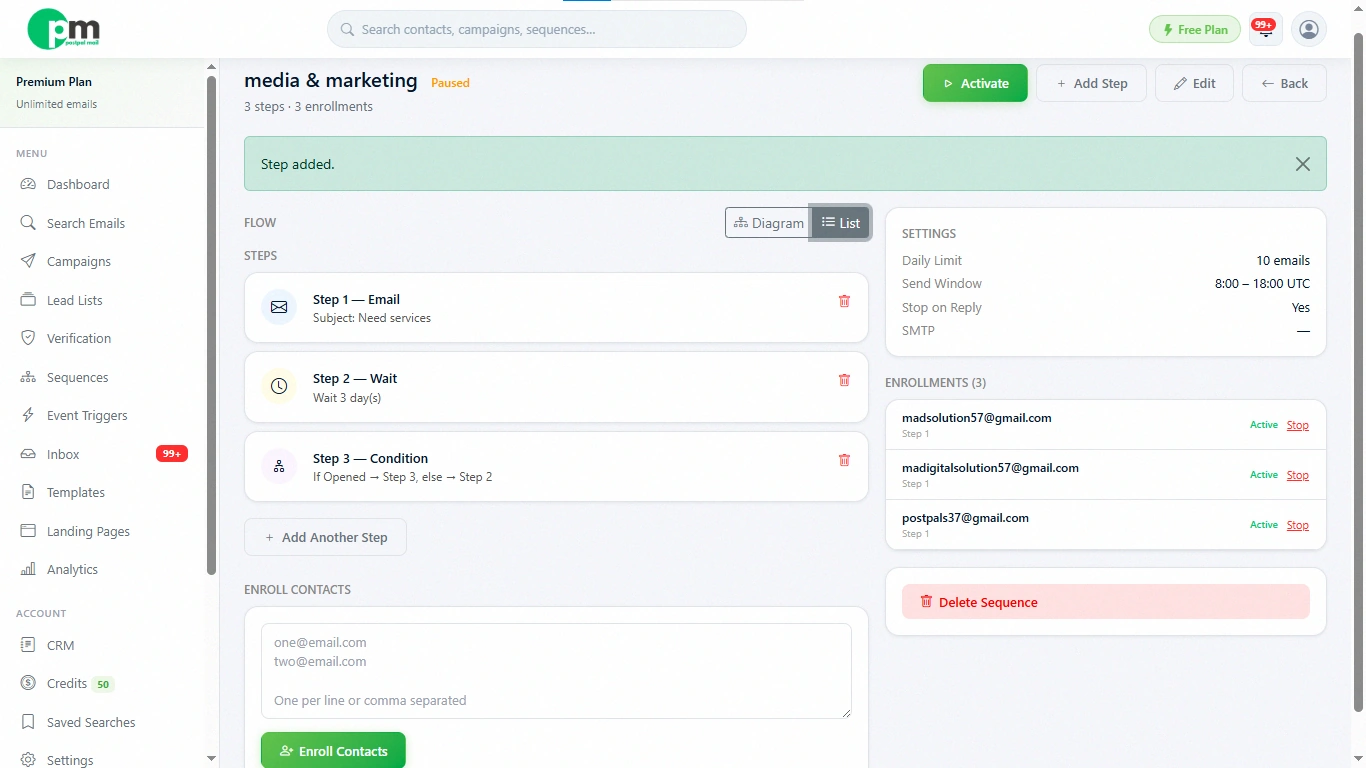
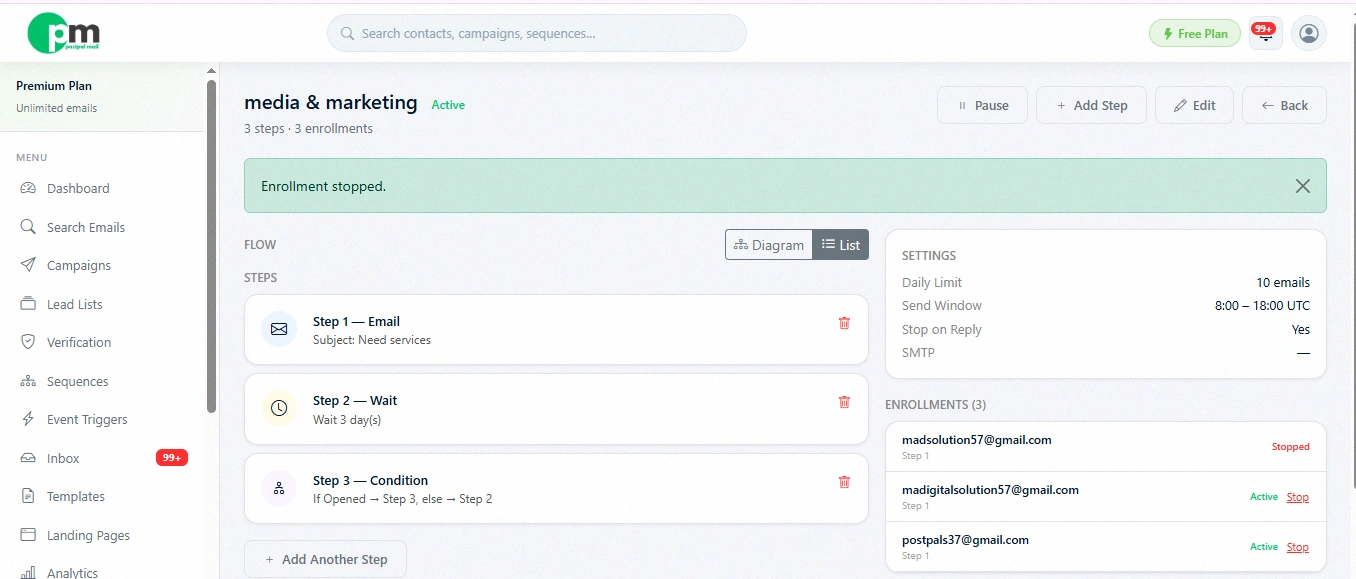
PostPalMail's sequences let you
queue the original email plus every follow-up ahead of time, with a set delay
between each step, so nobody has to remember "send email three on day
nine." If a lead replies partway through the leads sequence stops. No
awkward follow-up will land in someone’s inbox after lead has already
responded.
What to Actually Say in a Follow-Up
Good follow-ups add something. They don't just repeat
something. That might be a new angle on the same problem, a quick case study, a
relevant question, or honestly just a shorter, more direct version of your
original ask. Keep it tight. Nobody needs the pitch again. All they want is a
reason to hit reply.
Offer them an out, such as a quick. No question, instead of
pushing straight for a call. A brief nod, to the email will do. Do not assume
they remember every word of the email; they probably do not.
Subject Line: Reply in the Thread or Start Fresh?
Replying inside the thread usually beats starting a brand-new
subject line. Replying keeps the context visible. Does not read like a second
cold email out of nowhere. Inbox providers will not ding inbox providers for
Replying either and Replying saves the reader from having to figure out who
Replying is over again.
If Replying do want a subject line for a later follow-up
keep subject line short and specific rather, than vague. Something that hints
at the angle not a rehash of the original headline.
Know When to Stop Following Up
Persistence is good. Not always
the answer. Trying to email someone who has not shown any interest after
several times is not outreach anymore it is just making things worse. Two or
three follow-ups without any opens no clicks no replies is usually a sign to
stop and try someone.
It is much easier to make this
choice when you can see what is happening of just guessing. Looking at which
follow-up steps get. Replies inside PostPalMails analytics shows exactly where
people stop paying attention. This helps you change how often you reach out or
change the message of using the same rule, for every list.
Common Follow-Up Mistakes to Avoid
A few patterns keep popping up
in follow-ups that end up causing damage than good.
- Following up quickly like within a day or two before the first email even had a chance to be noticed.
- Sending the generic bump message to an entire list without mentioning anything specific about the person or their situation.
- Never stopping, so leads keep getting messages after its clear they're not interested.
- Sounding sorry or desperate subtly changes the focus. It moves the attention from the readers problem to your need to hear back.
Conclusion
Follow-up is not the part of cold outreach. Silence usually
just means timing. A second or third follow-, up message is often what gets the
reply that the first follow-up could not. What separates a follow-up that works
from one that gets ignored really comes down to spacing, tone. Whether you are
actually adding something new each follow-up.
Set the rhythm early in a sequence. Write follow-ups that
move forward from the message instead of just repeating it. Let your analytics
show you when someone has truly gone quiet. Try this on your campaign: plan two
or three follow-ups, from the beginning so you don’t miss chances after just
one email.
Disclaimer
This article is, for information. It shows the way people
reach out to others in a way as it is usually done when the article is written.
Different people, industries and different offers can lead to different
results. This article does not promise any response rate.