

Most cold emails are read for
three seconds and deleted by the fourth. The ones that actually get a reply
usually have a thing, in common. They are short. They focus on the person
receiving the email not on the person sending it. They ask for one simple specific
thing that’s easy to do. This guide breaks down exactly how to write one, with
real before and after examples rather than vague advice about 'being
authentic', because the actual mechanics of what makes an email replyable are
pretty consistent once you see enough of them side by side.
The Real Goal of a Cold Email
An emails job is not to close a sale it is to get a reply.
That one change, in how you think completely changes how you write everything.
You are not trying to explain your product in one message you are trying to say
just enough that the person wants to respond even if that response is just a
question. Emails that try to do much in one go usually end up doing nothing at
all because a person looking through their inbox decides within a few seconds
whether something is worth their time and a big block of text shows effort
needed instead of value given.
Anatomy of a Cold Email That Works
A cold email that gets replies
almost always follows the same basic shape:

●
Subject line: Keep the line short, specific and curious instead of salesy.
●
Opening line: Talk about them not, about yourself and show that the sender
actually looked at who they're. This shows interest and builds trust.
●
The middle: one clear
reason this is relevant to them specifically
●
The ask: one small, easy,
specific action, not a vague 'let me know if interested'
●
Sign off: short, with your
real name, no lengthy signature block
Subject Lines That Get Opened
The subject lines only job is
to get the email opened, nothing. Short, specific and slightly curious tends to
beat salesy every time.
|
Weak Subject Line |
Stronger Subject Line |
|
Increase Your Revenue Today! |
Quick question about {{company}}'s onboarding |
|
Partnership Opportunity |
Saw your post about {{topic}} |
|
Are You Interested in Our Services? |
Idea for {{company}} |
|
Introducing Our New Platform |
{{name}}, one thing I noticed |
Writing an Opening Line That Doesn't Get Deleted
The first line determines if the rest of the message is
read. Phrases such as "I hope this email finds you well" or "My
name is X and I work at Y" use up the one sentence that you were supposed
to get attention with. A stronger opening mention something specific about the
recipient – a recent post, a new role or something on their website – so the
reader can see that this is not a copy‑and‑paste, to five hundred people.
The Body, Keep It About Them, Not You
A common mistake is spending
three paragraphs on your company's history and features before ever mentioning
the reader. Flip that order. Begin by describing the reader situation or
problem they have or would like to have solved and briefly explain how you can
help. A couple of sentences is usually sufficient; don't go into a lengthy
sales pitch. If you find yourself writing a second paragraph about your
company, that's usually a sign it belongs in a follow up conversation, not the
first email.
The Ask, One Clear Call to Action
Finish with one request keep it short. 'Worth a chat?' or
'Can I send the person the details?' is easier to accept than 'Let the person
know if the person would like to schedule a 30-minute call to discuss further.'
The smaller and clearer the request, the more likely the person will reply.
A Real Example, Before and After
Here's the same outreach idea,
written two different ways, to show the difference in practice.
Before: "Hi, my
name is Sam and I work at DataFlow Solutions. We are a leading provider of data
analytics software that helps companies, like yours make decisions. I would
love to schedule a call to introduce our data analytics software platform and
discuss how data analytics software can help your business grow. Please let me
know your availability."
After: "Hi
Priya, noticed Brightline just expanded into two new markets, that usually
means a mess of spreadsheets tracking regional performance. We built a small
tool that pulls it into one dashboard automatically. Worth a quick look?"
The second version is shorter,
specific to the recipient, and asks for something small. That combination is
what actually gets replies.
Common Mistakes That Kill Reply Rates
●
Writing about your product before
writing about their problem
●
Using the same generic template
for wildly different industries or roles
●
Asking for a 30 minute call as the
very first ask, before any relationship exists
●
Sending once and never following
up, most replies come from a second or third message
●
Long paragraphs that take real
effort to read on a phone screen
Most of these come down to the
same root cause, writing the email around what you want to say rather than what
the recipient would actually want to read. Reading your own draft back as if
you were the stranger receiving it, cold, with no context, is often enough to
catch two or three of these before you ever hit send.
How PostPalMail Helps
Writing a strong template once and reusing it well is where the Template Library comes in. Personalization tokens like {{name}} and {{company}} let you write one message that still reads as individually written for every recipient, which is exactly the balance the before and after example above is built around.
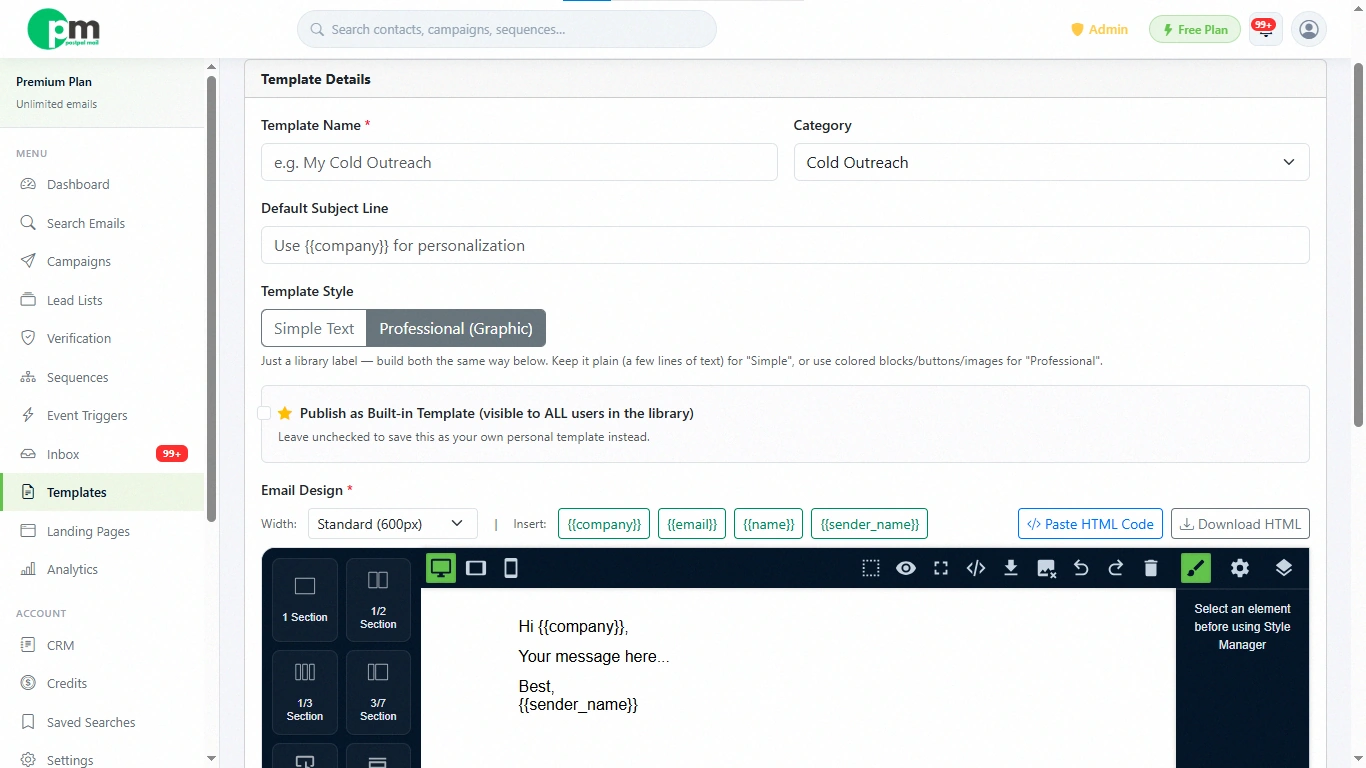
Because most
replies come from a follow‑up of the first email Sequence Builder automatically handles the second and third message. So, a
good template does not stop working after one send.
Start Writing Better Cold Emails with PostPalMail
A good structure only helps if
it's easy to reuse and send well. Create a free PostPalMail account
and put together a template that follows everything covered here.
Disclaimer: This article gives information only. Make sure that the way
you reach out to people follows the rules, for email marketing in the places
where your contacts live. Always check that your outreach practices follow the
email marketing rules that apply where your contacts are located.