

Both end up in an inbox both use email as the way to send
messages and people often confuse the two terms. But cold email and email
marketing follow different rules target different groups of people and have different
purposes and mixing them in your plan usually means using the wrong tool for
the task. Here is what actually makes them different and how to know which one
you should actually be working on.
The Short Answer
Cold email is a way to reach out to a person who has never
heard from you and has not signed up sent individually or in targeted groups
usually to start a chat. Email marketing is a method of sending messages to
people who have already signed up through a signup form sent to a larger group
at once usually to help explain or sell to a current audience. The same
channel, a different relationship with the person on the other side and that
one difference changes almost everything, about how each message is written,
sent and measured.
Where People Get This Confused
The confusion usually comes
from the fact that both feel like 'sending an email to someone,' and both can
be done through similar looking software. The legal basis is different with one
side using consent. The other using none. The writing style is also different
one is a note and the other is a branded template. I see that the recipient can
usually notice the difference in the first sentence. If you treat an email like
a newsletter blast, a generic templated message that is sent to hundreds of
people without a specific reason, for each person you will quickly find that
this approach leads to being ignored or being marked as spam.
What Cold Email Actually Is
Cold email is the digital
version of a sales call to someone who's never heard of your company. You've
identified a specific person or company as a good fit, and you're reaching out
directly, usually because you believe your product or service solves a real
problem for them. It's personal by design, tailored to the recipient, sent from
a real individual's address, and it succeeds or fails on relevance to that one
person.

What Email Marketing Actually Is
Email marketing is what happens after someone already knows
who Email marketing is, whether that person is a customer, a newsletter
subscriber or someone who filled out a form on your website. Email marketing is
built around consent; the person signed up expecting to hear from Email
marketing. Email marketing usually sends messages to segments or, to the list
at once using a consistent template instead of a personal one‑to‑one
message. The goal of Email marketing is engagement, not a first conversation.
Key Differences at a Glance
|
Aspect |
Cold Email |
Email Marketing |
|
Relationship |
No prior contact, not opted in |
Recipient opted in, already knows you |
|
Typical sender |
A real person's individual address |
Often a branded or company address |
|
Personalization |
Written or tailored per recipient |
One template sent to a whole segment |
|
Volume per send |
Small, targeted batches |
Can be large, list wide sends |
|
Primary goal |
Start a conversation or meeting |
Nurture, inform, or sell to an existing audience |
|
Success metric |
Reply rate |
Open rate, click rate, conversions |
When to Use Email Marketing
Email marketing fits once you already have an audience, a
customer base, a newsletter list or trial users and you want to keep the
audience engaged the audience. The audience moving toward a purchase. Product
updates, newsletters, onboarding sequences for signups and promotional
campaigns to existing customers all fall under this category. Email marketing
works at a scale precisely because the audience already expects to hear from
you. This is also why sending a cold pitch to existing newsletter subscribers
usually feels off to the existing newsletter subscribers because existing
newsletter subscribers signed up for updates, not a sales pitch.
When to Use Email Marketing
Email marketing fits once you already have an audience, a
customer base, a newsletter list or trial users and you want to keep the
audience engaged the audience. The audience moving toward a purchase. Product
updates, newsletters, onboarding sequences for signups and promotional
campaigns to existing customers all fall under this category. Email marketing
works at a scale precisely because the audience already expects to hear from
you. This is also why sending a cold pitch to existing newsletter subscribers
usually feels off to the existing newsletter subscribers because existing
newsletter subscribers signed up for updates, not a sales pitch.
Can You Use Both Together?
Yes, and most growing companies
eventually do. Cold email brings in new contacts who didn't know you existed,
and once someone from that outreach responds, shows interest, or becomes a
customer, they naturally move into your email marketing list going forward. The
two aren't competing strategies, they're different stages of the same relationship,
cold email for the introduction, email marketing for everything after. Trying
to run only one forever tends to hit a ceiling eventually, cold email alone
doesn't nurture existing relationships well, and email marketing alone doesn't
bring in anyone new.
How PostPalMail Fits In
PostPalMail is built specifically around the cold email side of this equation. The Search page helps you find the specific people worth reaching out to, personalization tokens make each message feel individually written even at volume, and safe sending delays keep outreach looking like it's coming from a real person rather than a mass blast.
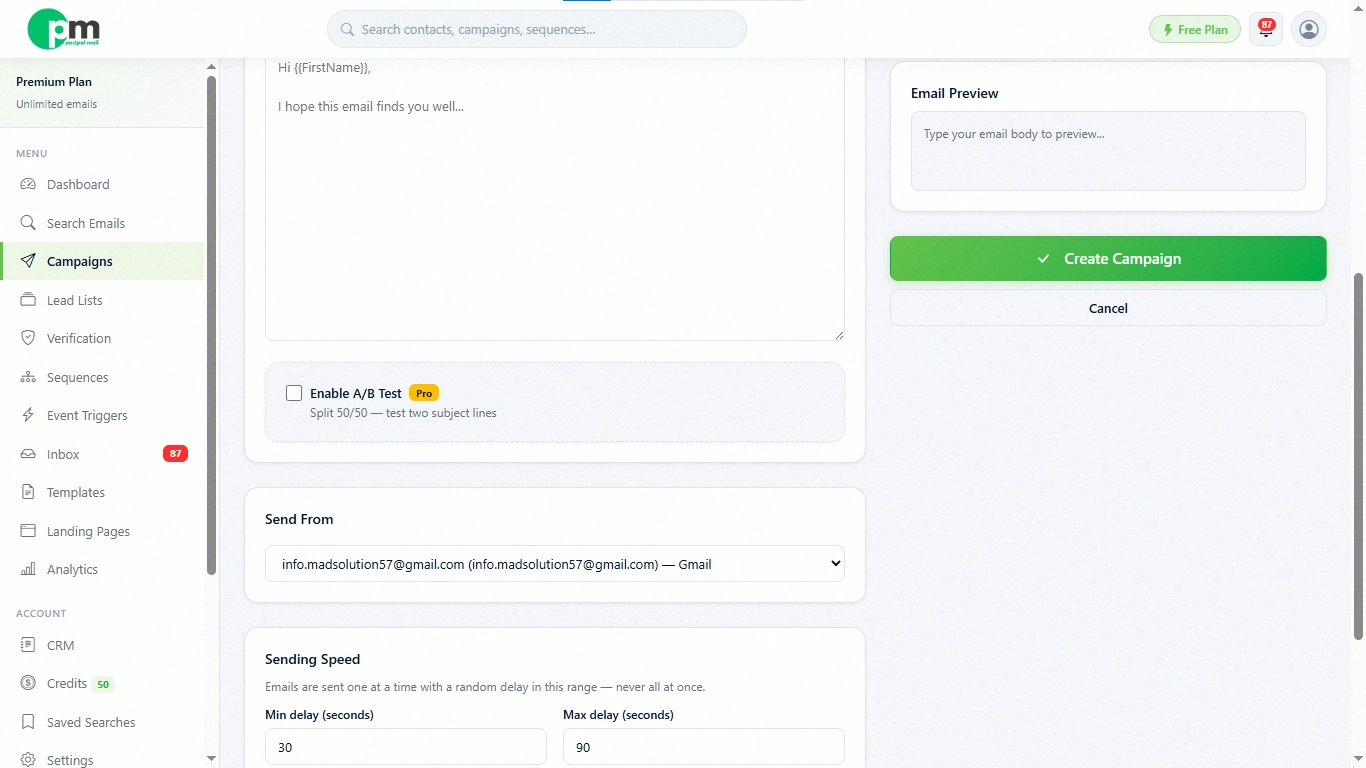
Once someone replies, Sequence Builder takes care of the follow-ups that most cold outreach really
needs to get a response. A single email usually isn't enough.
Start Your Cold Email Outreach with PostPalMail
If you're at the stage of
finding your first customers rather than marketing to existing ones, cold email
is where to start. Create a
free PostPalMail account and build your first targeted outreach list today.
Disclaimer: This article
is only for information. Is not legal guidance. Make sure that the way you
reach out to people follows the rules for email marketing in the places where
your contacts live. Always check that your methods are in line, with the laws
that apply to the areas where your contacts are located.